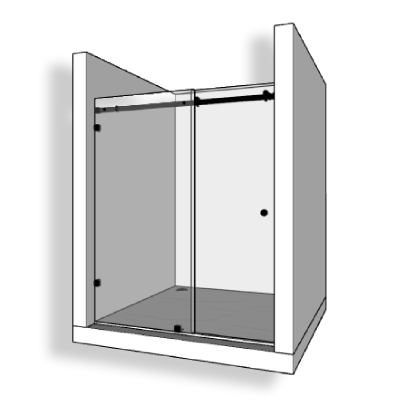
Bathrooms in India deal with a specific combination of stresses that many shower enclosures simply aren’t built for: hard water, high humidity for most of the year, and frequent, daily use by multiple people. None of these are occasional problems — they’re the baseline conditions a shower enclosure has to perform under every single day. That’s why material selection matters more here than the marketing usually suggests, and why the three things worth checking before you buy are the hardware, the surface finish, and the glass itself.
Hardware That Can Handle Daily Use in a Humid Bathroom
Hinges, rollers, and handles take the physical load of a door opening and closing multiple times a day, and in a humid environment, the metal underneath matters as much as how it looks. Bathsy’s L-Shape, Partial, Sliding, and Swing enclosures use SS 304-grade stainless steel and brass hardware as standard, which resists corrosion noticeably better than the basic alloys used in cheaper fittings — a real difference in bathrooms that stay damp for hours after every shower. The Framed line, Bathsy’s premium option, is built with aluminum and brass hardware instead, matched to that line’s heavier frame construction. Either way, the hardware is backed by a 10-year warranty, which is the kind of commitment that’s only realistic when the underlying material actually suits the conditions it has to survive.

A Surface Finish That Resists Hard Water
Hard water is one of the more underestimated stresses on bathroom fittings — mineral deposits build up on any surface that isn’t properly finished, and over time that shows up as corrosion, discoloration, or staining around hinges and handles. A quality surface finish is what prevents that buildup from taking hold in the first place, which is part of why the finish on an enclosure’s hardware isn’t a purely cosmetic choice; it’s doing real protective work every time the bathroom is used.
Glass Built for Daily, High-Frequency Use
Every Bathsy enclosure uses toughened (tempered) safety glass in 8mm or 10mm thickness depending on the configuration, specifically because ordinary glass doesn’t hold up to the kind of repeated daily contact a shower door sees — being pushed open, slid shut, occasionally bumped. Toughened glass is built to handle that high-frequency use without the risk of long-term weakening, and it’s backed by a 5-year glass warranty. For more on how the glass itself is engineered, see our piece on why tempering matters more than thickness alone.
If you’re planning a new enclosure and want pricing that reflects these same material standards, get a quick quote or browse the full price guide to compare enclosure types, glass, and hardware finishes.