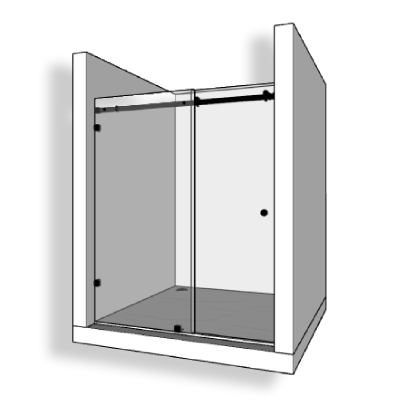

Hiring someone to install a glass shower enclosure costs more than buying the glass and fittings alone, and it’s reasonable to wonder whether a reasonably handy homeowner could skip that cost and do it themselves. For most home fixtures, that’s a fair question. For a toughened-glass shower enclosure, the honest answer has less to do with skill or confidence than with one fact about the glass itself that most people don’t know until they’ve already looked into it.
Why the Glass Itself Rules Out a Cut-to-Fit DIY Approach
A shower enclosure’s glass panels are made from toughened (tempered) safety glass, typically 8mm or 10mm thick. Toughening is a heat-treatment process that leaves the glass under controlled internal stress, which is what makes it break into small, blunt pieces instead of sharp shards if it ever fails. That same internal stress means toughened glass cannot be cut, drilled, or trimmed after the tempering process — any attempt to resize or modify it on site causes it to shatter. This isn’t a Bathsy-specific limitation; it’s how tempered glass behaves everywhere it’s used, from shower doors to car windscreens.
In practice, this means every panel has to be manufactured to the exact finished dimensions of your bathroom before it’s toughened, which is also why an accurate site measurement matters more for a shower enclosure than it would for something you could still trim on installation day. Our guide to measuring your bathroom for an accurate quote and our walkthrough of what a site visit actually covers both exist because of this constraint: the measurement step is doing the job that on-site adjustment would normally do for other materials, and it only gets one real attempt before fabrication locks the dimensions in.
What a Professional Installation Actually Involves
Beyond the glass itself, fitting a shower enclosure correctly involves checking that walls and floor are plumb and level (older Indian bathrooms rarely are, exactly), setting hinges, channels, and handles so a heavy glass door swings or slides smoothly without binding, and sealing every edge so water stays inside the enclosure instead of finding a path around it. Toughened glass panels are also heavier and more awkward to maneuver into a tight bathroom doorway than most people expect, which is one reason installation is normally handled by a small team rather than one person working alone. We’ve covered the full sequence in how a shower enclosure is installed, step by step if you want the detailed version.
Where a DIY Attempt Usually Goes Wrong
Assuming someone sourced correctly pre-cut toughened glass and matching hardware, the failure points in a DIY install tend to be the same few things, every time. Hinges or sliding tracks mounted slightly off from true vertical or horizontal make a door feel heavy, drag, or swing shut on its own — a problem that’s hard to diagnose after the fact without re-checking the original alignment. Sealant applied without the full joint properly cleaned, dried, and supported is the single most common cause of the kind of ongoing water seepage we cover in why water seepage happens and how it’s prevented — it’s rarely the glass that’s at fault, and almost always the seal around it. Our list of common installation mistakes covers several more, and nearly all of them are fixable in theory but genuinely hard to catch without installation experience to compare against.
Where the Real Trade-off Sits
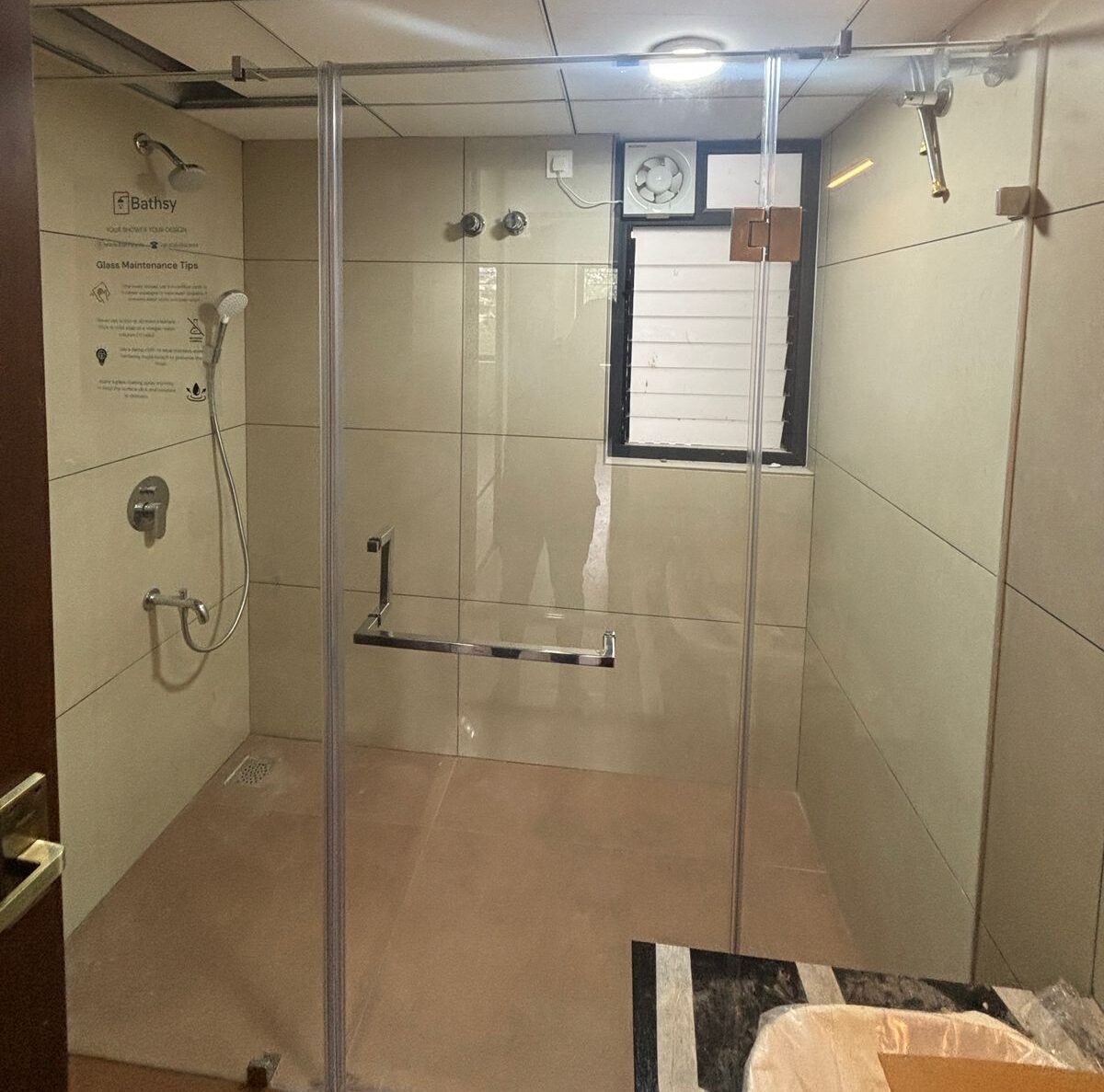
None of this means a shower enclosure has to be expensive to get right, or that professional installation is only about cost. It’s that the parts of the job that actually matter — accurate measurement before the glass is made, correct alignment of hardware that’s mounted once and lived with for years, and a seal that holds up under daily water exposure — all happen before or during a single installation visit, with no realistic way to redo them cheaply afterward if something’s off. A shower enclosure quote bundles this work in alongside the glass and hardware itself; our breakdown of what’s actually included in a quote explains what that covers. If you’re weighing the decision, a free site visit and a Quick Quote cost nothing and tell you exactly what a correctly measured, professionally installed enclosure would involve for your specific bathroom — which is a more useful comparison than a generic DIY-vs-professional cost estimate.