

A streaky shower enclosure usually gets blamed on the glass, but the glass itself isn’t the problem. Streaks form when water is left to evaporate on the surface instead of being wiped or squeegeed away — as it dries, it leaves behind the minerals and soap residue it was carrying, which is what you’re actually seeing as a streak or a cloudy spot. Once you treat it as a drying problem rather than a glass problem, keeping an enclosure streak-free becomes a lot more manageable.
The One Habit That Does Most of the Work
Squeegeeing the glass immediately after every shower, while it’s still wet, is the single biggest thing you can do to prevent streaks from forming in the first place. It takes under a minute, and it removes the water before it has a chance to evaporate and leave deposits behind. If you only adopt one habit from this guide, make it this one — everything else here is about managing what the squeegee doesn’t catch.
A Weekly Deeper Clean for Hard Water Spots
Daily squeegeeing slows down mineral buildup, but it won’t eliminate it entirely, especially with the hard water common across Indian cities. Once a week, a proper clean with a mild, glass-safe cleaner or a diluted vinegar-and-water solution, followed by a dry microfiber wipe, lifts the mineral film that a squeegee alone leaves behind over time. The microfibre finish matters as much as the cleaner — a cotton towel or paper towel tends to leave its own lint and streaks, undoing the work.
What to Avoid
Abrasive scrubbers, steel wool, or scouring powders can scratch toughened glass and wear down a nano coating well before its usual lifespan, so they’re worth avoiding even on stubborn spots — a longer soak with a mild cleaner works better than force. Harsh ammonia-based or bleach-heavy cleaners are also worth skipping; beyond being unnecessary for shower glass, they can degrade hardware finishes and coatings faster than a standard bathroom cleaner would, and they shouldn’t be left pooling around hinges or handles, even on corrosion-resistant SS 304 hardware.
Finish Changes What You’ll Notice, Not What You Should Do
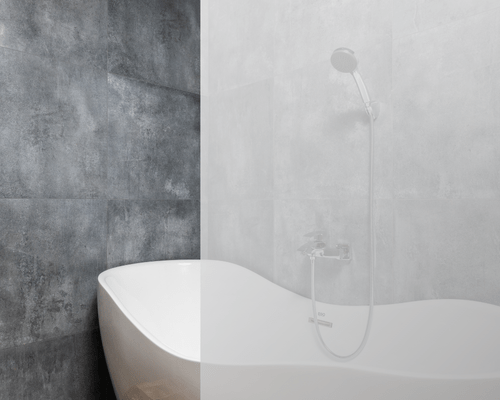
Clear glass shows every streak and water spot the most readily, simply because there’s nothing on the surface to break up the view — it’s the finish that rewards a consistent squeegee habit the most. Frosted, Fluted, and Tinted glass naturally hide minor residue and water spots for longer between cleans, which is one of the quieter practical advantages of those finishes beyond the privacy and look they’re usually chosen for.
If Your Glass Has a Nano Coating
A nano coating changes how water behaves on the glass — instead of spreading into a film, water beads up and runs off more easily, carrying some soap residue with it, which is what makes day-to-day cleaning faster on coated glass. It isn’t permanent, though, and it isn’t a substitute for the habits above; treat it as something that reduces how much effort each clean takes, not something that removes the need to clean at all.
For more on how that coating works and what it’s backed by, see our breakdown of what nano coating actually does. And if hard water and humidity are a bigger concern for your bathroom specifically, our guide on materials built for Indian bathroom conditions covers that in more depth. If you’re comparing glass finishes before your order, our glass finish guide is a good next read.




Pingback: Signs Your Shower Enclosure Needs Replacing | Bathsy
Pingback: Shower Enclosure Maintenance Schedule | Bathsy