
Our guide to choosing an enclosure by bathroom layout covers sliding versus swing doors in a couple of lines: tight floor space points to sliding, enough clearance points to swing. That’s the right starting rule, but it skips the parts that actually matter once you’re deciding for a specific small bathroom — what each configuration costs, how each one holds up over years of daily use, and what “enough clearance” really means in practice. Here’s the deeper comparison.
The Core Difference Is Space, Not Price
It’s worth saying plainly: a sliding door and a swing door in the same glass finish and hardware colour cost exactly the same per square foot at Bathsy. Door configuration doesn’t move the price — only glass type and hardware colour do. So the decision between sliding and swing in a small bathroom isn’t a budget trade-off at all. It’s purely about whether your bathroom has the floor space a swing door needs to open.
What Swing Actually Needs
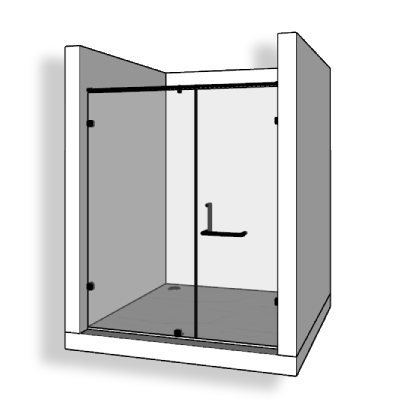
A swing door is hinged and opens outward into the bathroom, the same way a regular door does, available in SS Round Handle or SS Square Handle configurations. That gives it a more conventional, cabin-like feel, but it needs enough clear floor space in the room for the door to swing through its full arc without hitting a sink, a towel rail, or the opposite wall. In a genuinely small bathroom, that swept area can take up more usable floor space than people expect — which is exactly why it’s worth confirming at a site visit rather than guessing from a tape measure alone, since the real constraint is the swing path, not just the door’s own width.
What Sliding Actually Needs
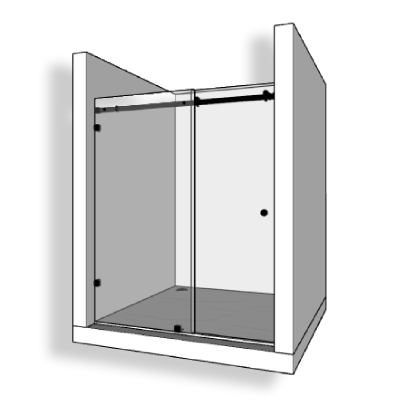
A sliding door runs on a track and moves sideways along the face of the enclosure instead, in Aluminum Single Door Sliding or SS Square Sliding configurations. Because the door travels along a line it’s already occupying rather than swinging into open space, it needs side clearance along the track rather than a clear arc in the middle of the room — which is why it’s the more space-efficient choice in compact bathrooms. The trade-off isn’t cost; it’s that a sliding door depends on its rollers and track staying clean and properly aligned, since that’s the hardware doing all the work on a door that gets used multiple times a day.
Long-Term Hardware Behaviour
The two configurations age differently, and it’s worth knowing this going in rather than discovering it later. Swing doors put all their load on hinges, which on well-made hardware hold their torque and keep the door closing flush for years; on lower-grade hardware, the first sign of wear is usually a door that no longer sits flush or creaks under load. Sliding doors put the load on rollers and the track instead — good rollers glide quietly with minimal resistance, while poor ones bind or wear unevenly so the door starts to drag. Bathsy builds both configurations on the same high-grade SS 304 stainless steel and brass hardware, carrying the same 10-year hardware warranty either way — see our hardware guide for more on what that grade of hardware is actually built to resist.
Which One Should You Choose?
If your bathroom genuinely doesn’t have the floor space for a door to swing open without hitting something, sliding is the practical choice, not just the space-saving one — it removes the constraint entirely rather than working around it. If you do have the clearance, swing is a matter of preference rather than necessity, and some people simply prefer the more conventional feel of a hinged door. Either way, glass finish and hardware colour are chosen independently of this decision, so you’re not giving up any of Bathsy’s five finishes or five hardware colours by picking one configuration over the other.
Confirming What Fits
The exact clearance your bathroom has, and which configuration it can actually support, gets confirmed at a free Bathsy site visit rather than estimated from general rules of thumb. See our bathroom layout guide for how this fits into choosing an enclosure type overall, and our guide to all six types for the full range these configurations apply to. Get a quick quote to get started.



Pingback: Does a Shower Enclosure Trap Humidity? What Actually Helps a Bathroom Breathe - Bathsy
Pingback: Choosing a Shower Enclosure When an Elderly Family Member Will Use It - Bathsy
Pingback: Shower Enclosures for a Kids' Bathroom | Bathsy